

No guarantees
On risk, cancer, and what the outdoors have taught me

Dear friend,
I never thought I’d be the person who slept in on a bluebird powder day, her partner kissing her on the forehead as they left for the mountain. I also never thought I’d be the person diagnosed with cancer, either. It’s a transition, to say the least, full of grief, learning, opportunity, and joy.
Cancer continues to present itself as a series of situations I struggle with. In conversations with other people who have been diagnosed with breast cancer, going down the Reddit rabbit hole, or reading the clinical trials, I know my diagnosis is very different. I exist in the gray area, parsing out which elements apply to me and which ones don’t, trying to piece together a full picture. I’m learning to trust my care team and expand my comfort with the unknown.
I don’t have any experience navigating cancer, so there’s little wisdom to pull from my past. But this last week, I made the connection between how I manage risk in the outdoors and how I’m managing a cancer diagnosis.
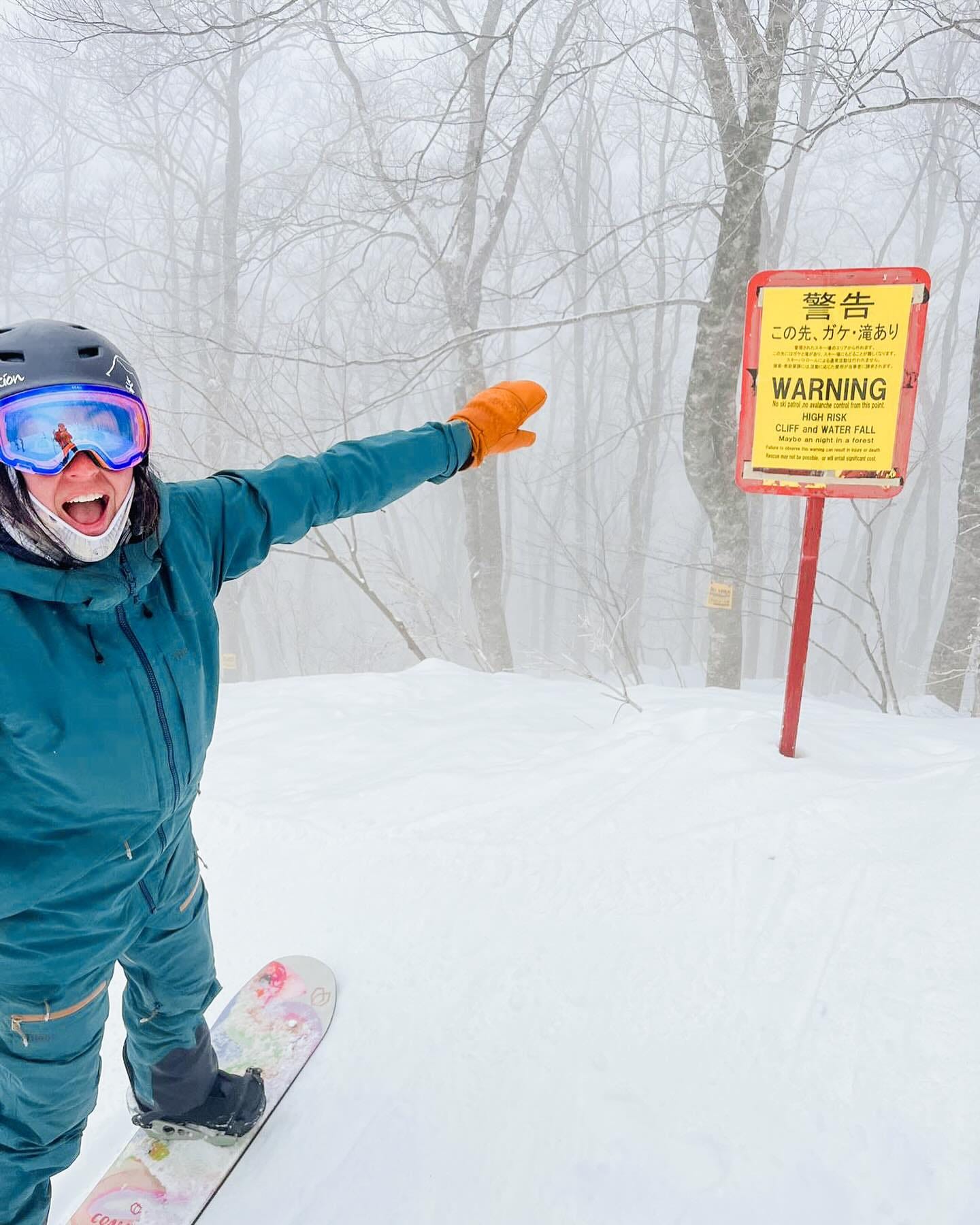

People love to tell me I’m brave.
I hear it when I describe cycling across Kenya, accumulating red dust in places it will never wash away, watching giraffes emerge from the tree line like a fever dream. I hear it when I strap into my snowboard and drop into terrain that would make some people’s legs go liquid.
What they mean, without saying it, is: Isn’t that dangerous?
And the answer is yep, it sure can be, just like getting behind the wheel of a car or sitting as a passenger in an Uber. What people misunderstand about those of us who choose to do things outside of the ordinary is that we are not reckless. We are prepared. The risk management that happens before I clip into my pedals or strap onto my board is invisible to the casual observer, and that invisibility is what can make people mistake competence for bravado.
I read the terrain, follow the weather, chat with locals, and tap into my skills before I commit to a line. I know when and how to listen to my body and mind, and to ask the people riding with me how they feel. I don’t just show up and wing it. Whether it’s cycling in Kenya or snowboarding in Japan, I’m leaning into the particular wisdom that only repetition teaches. I have spent the last 25 years learning how to assess a situation, calibrate risk, and make decisions I (and my clients) can live with. Sometimes quite literally.

Cancer doesn’t work like that.
I was diagnosed and suddenly found myself standing at the top of a run I’d never seen before, with gear I didn’t know how to use, in conditions I had never encountered. There is no training for cancer. No muscle memory for reading a pathology report. No way to fall and get back up and session it until you’ve got it dialed. I’ve spent months feeling like someone handed me a bike with flat tires and spokes that need to be trued and said, okay, go. And unlike Kenya, where I know every day of the itinerary and have trusted guides and a support vehicle that’s never more than a few kilometers behind, I couldn’t see what was ahead.
My cancer diagnosis sandbagged me; it’s never been straightforward. All I can do is try to understand the risk associated with my decisions and use my intuition to parse through my feelings.

I’m six weeks post-surgery now. Last week, I made the difficult decision not to go through with radiation. My oncologist said I didn’t need it. My surgeon said I did. My radiologist said the guidelines were clear—radiation is part of my treatment. And when I asked him through sobs if he were me, would he do it, he said no. Yes, radiation could prevent a recurrence of cancer, but it also could leave me with lifelong, debilitating lymphedema (amongst other long-term side effects). Neither option seems good, and yet I have to make the call. There’s clearly a whole lot more to this story, but for me, the benefit didn’t outweigh the risk, and I have other ways to achieve the same outcome of living a cancer-free life.
Sitting in that decision, I realized something: I have made this call before. Not about cancer, obviously. But I have stood at the top of something uncertain and asked myself the same questions. What do I actually know? What does my body say? What am I willing to risk, and what is non-negotiable? Who do I trust to help me read this? When do I call it and get in the support vehicle, and when do I keep pedaling?
Making that decision was hard enough on its own. Making it last week was something else entirely.

On February 17th, a deadly and tragic avalanche took the lives of nine people near the Frog Lake Huts outside of Truckee. I followed the news with the particular dread that only people who spend time in the backcountry understand: the dread of recognition. Deep down, I know it could have been me. As a participant. As a guide. I know people have strong feelings about this incident, and that there are so many unanswered questions, but in approaching this with compassion and the reality that sometimes very bad things happen to very good people, I believe that the people caught in that slide, and the six who survived, were experienced, informed, and doing what they loved with the information they had at that time.
My heart aches for them, for every single person touched by this tragedy. And it reminded me, at exactly the moment I had to make a seemingly life-or-death decision, that sometimes you do everything right and Mother Nature or the Universe or God or whatever you want to call it has a different plan. Sometimes the risk you thought you understood reorganizes itself without warning.

As I consider my future, I’m overwhelmed with the what-ifs. I can already imagine what some people will say if I experience a recurrence, knowing that I chose to forgo radiation. They will do what bystanders always do: assess someone else’s life from the sideline, armed with hindsight, and find the decision wanting. She should have done the radiation. She took a risk she didn’t need to. As if the choice were simple. As if any of us, standing at the top of something we can’t fully see, can guarantee the outcome.
I know that cancer isn’t just a hard trail I haven’t ridden yet. The stakes are different; it’s not something you choose, and it’s certainly not fun. But the feeling of being a beginner in a body that has always known what to do is genuinely disorienting. But I’m starting to think the framework is transferable, that the instincts I’ve honed on bikes and boards, the ones that tell me when to push and when to pull back, when to trust the people around me and when to trust only myself, might be more portable than I thought.
I don't know if I'm making the right decision to forgo radiation. I might not be. But I understand more clearly now than I ever have before that life is uncertain, risk is unavoidable, and waiting for a guaranteed outcome before you act is its own kind of danger. All any of us can do, whether that’s on the mountain, in the doctor's office, or in the gray areas where the right answer refuses to show itself, is move forward with the best information we have and the deepest trust we can muster in ourselves.
Until next time,
Jen
Thanks for reading. All typos are intentional to make sure you’re paying attention. I stan an em dash and learned how to use it in 1996 when I went to school to become a journalist.
I’m told a click of the ❤️ button at the bottom makes a difference. So does sharing this newsletter with your friends. Comments make my heart flutter. Paid subscriptions keep it all alive. I’m grateful for all of it and for you.
Fantastic post Jen!!! You are such a gifted writer and story teller......keep digging there is a pony in here somewhere😂 Do you know anyone can do illustrations? If so, consider writing a book much like you did in this post above. Have very simple illustrations and font like a kid might have. If you see virtue in this proposal then I will help you conceptualize the actual book(let) and brainstorm targeted markets.......love ya friend❣️
Ugh, I feel you so hard. To the trails we haven't ridden yet...